
Roofing· Urgent service
Storm Damage Roofing
Storm damage is not always visible from the ground.
Hail, high winds and falling limbs can damage shingles, flashing and gutters in ways that lead to leaks weeks later. A storm damage inspection documents what happened and what needs repair.
What storm damage roofing covers
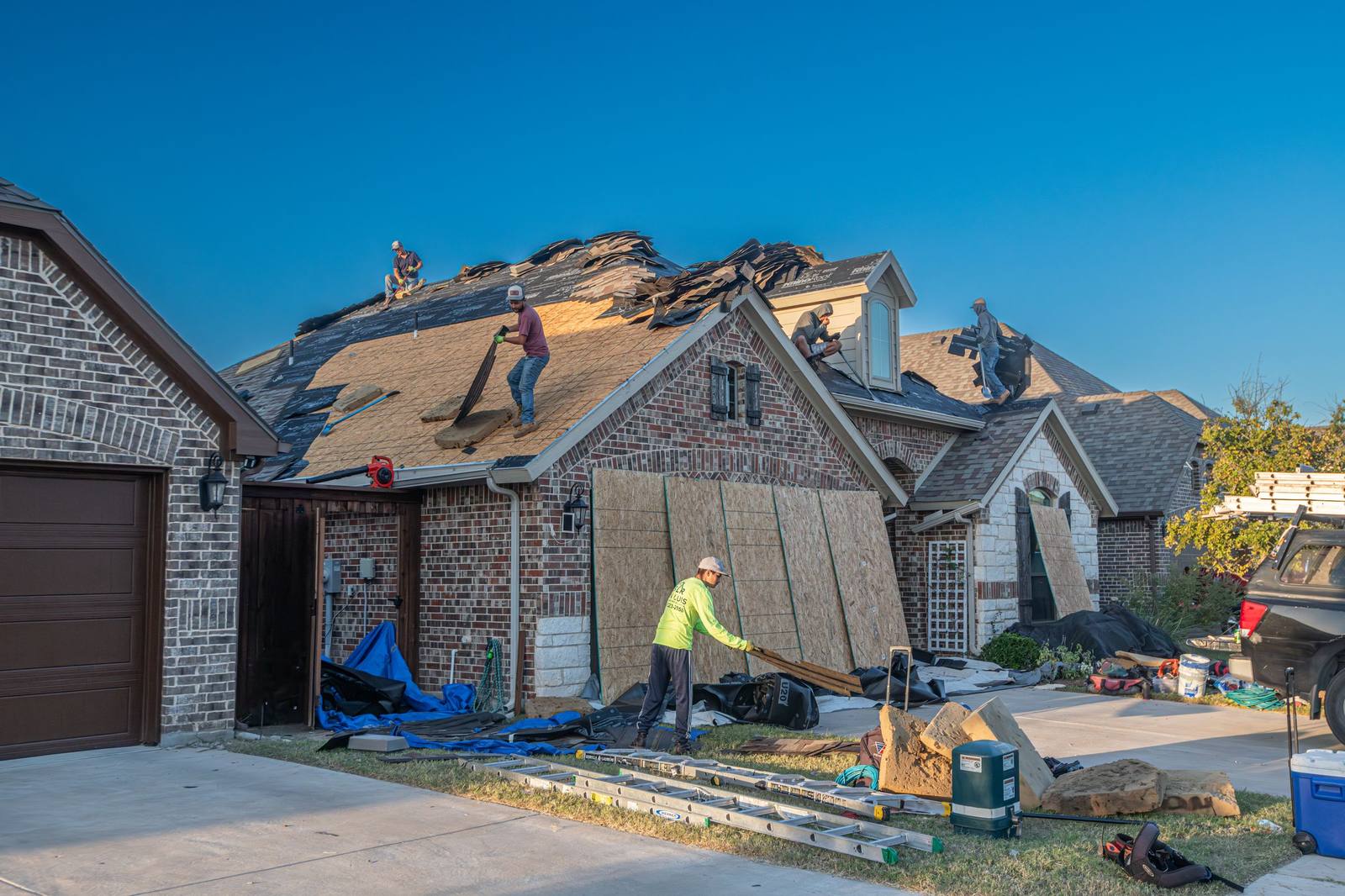
After a major storm, roof damage ranges from obvious, like a tree through the roof, to subtle, like bruised shingles from hail or lifted tabs from wind that broke the seal. Subtle damage may not leak right away, but it can shorten the life of the roof.
Storm damage service starts with an inspection to document the damage with photos, followed by temporary protection if needed and a repair or replacement plan. That documentation can be shared with your insurance company if you decide to file a claim.
Signs of storm damage to your roof
Check these from the ground. Do not climb onto a damaged roof.
Missing or creased shingles
Wind can lift shingles, crease them or tear them off completely.
Dents in gutters and vents
Hail dents on soft metal are an easy way to tell hail hit the roof.
Granules piled at downspouts
A sudden pile of granules after a storm can mean hail knocked them off.
Damaged flashing or exposed nails
Bent or lifted flashing around chimneys and vents can let water in.
New water stains inside
Ceiling stains after a storm mean water is getting through.
How storm damage is handled
The order matters: protect the home first, then document, then repair.
Make it safe
If the roof is open or a tree is involved, emergency tarping and tree removal come first.
Inspect and document
The roof, gutters, vents and flashing are inspected and photographed, with the damage noted by slope.
Share findings
You receive the findings and a recommended scope. You decide whether to involve your insurer.
Repair or replace
Damaged sections are repaired, or the roof is replaced if the damage is widespread.
Interior follow-up
If water got inside, drying and interior repairs are coordinated through the same request.
Every property is different. The exact scope is set after an on-site assessment.
One call, every trade, start to finish
Roof problems often come with interior damage attached. We can coordinate the roof work and any water damage inside from the same request.
One point of contact
You work with one coordinator instead of tracking down separate contractors for each part of the job.
Every trade the job needs
Restoration rarely stops at one trade. Follow-on work like drywall, flooring, electrical or roofing can run through the same request.
Local professionals
We connect homeowners with service professionals in our network across Illinois, Missouri, Kentucky and Indiana.
Records you can share
Photos and written scopes from the job can be shared with your insurer at your discretion. We are not affiliated with any insurance company and do not make coverage decisions.
Storm Damage Roofing FAQs
Related services
Had a storm come through?
Tell us what happened and what you can see. If the roof is open to weather, call us now.
Call +1 (618) 925-0085Filling out the form
Under Services, choose Roofing, then select Storm damage. If this is happening now, mark the emergency status as Yes.
Not a homeowner?