Roofing
Full Roof Replacement
When repairs stop making sense, a new roof starts from the deck up.
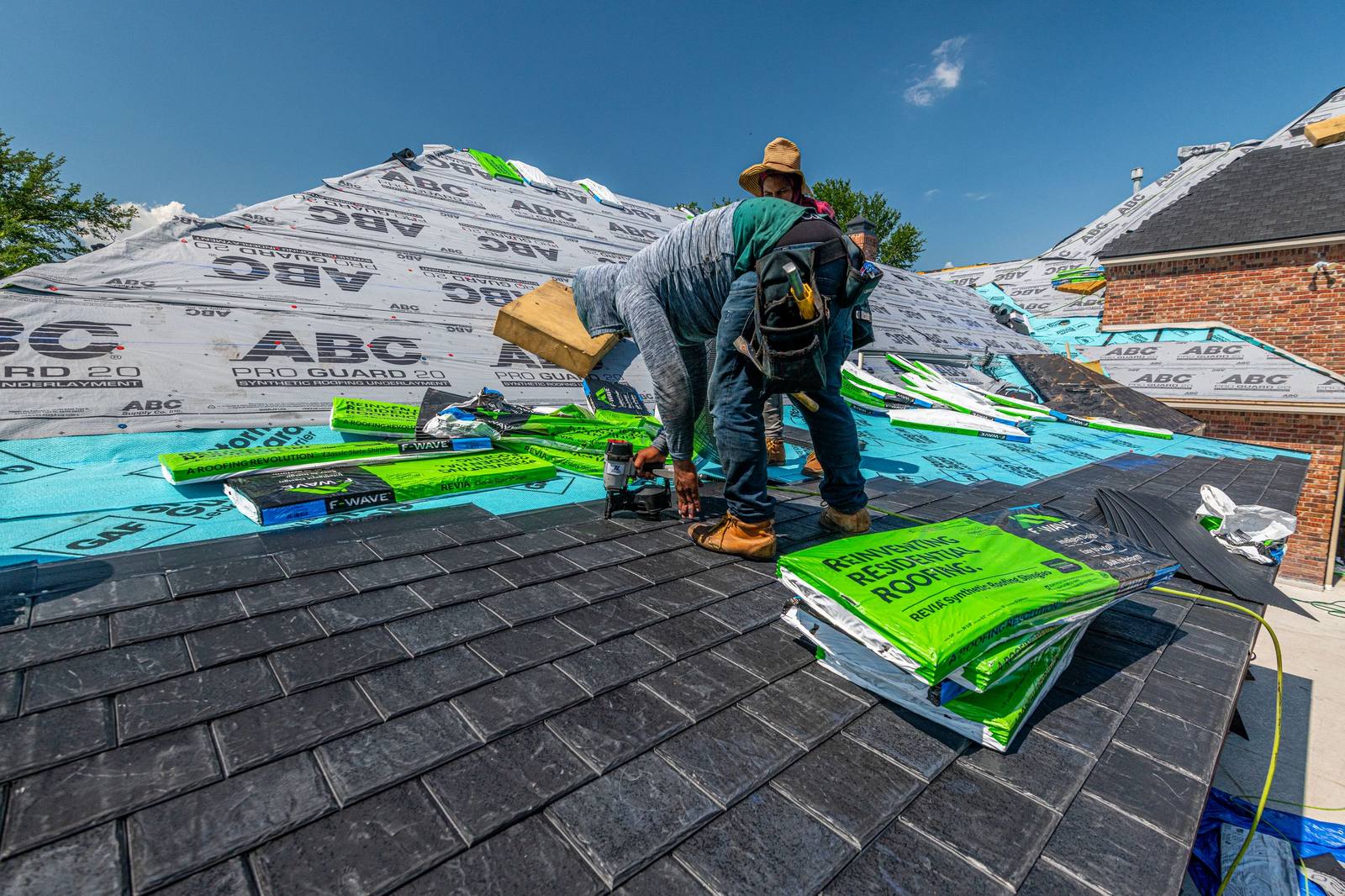
A full roof replacement removes the old roofing down to the deck, repairs any damaged sheathing and installs a complete new system, including underlayment, flashing and ventilation.
What a full roof replacement includes
Most roofs reach a point where patching leaks no longer solves the problem. Shingles lose granules and become brittle, flashing fails in several places, and leaks show up faster than they can be repaired. At that point, replacing the whole roof is usually the more reliable option.
A complete tear-off lets the crew inspect the roof deck itself. Soft or rotted sheathing can be replaced before the new roof goes on, which is not possible with an overlay. New underlayment, ice and water protection where needed, drip edge, flashing and ventilation are installed with the new roofing.
Signs a roof may need replacing
Look from the ground, from the attic and in your gutters.
Granules in the gutters
Heavy granule loss leaves shingles exposed to UV and weather and speeds up wear.
Curling or cupped shingles
Shingles that curl at the edges or cup in the middle are near the end of their life.
Sagging roof lines
A dip in the roof can point to deck or framing problems that need attention.
Daylight in the attic
Light coming through the roof boards means water can get in too.
Repeated repairs
If you are calling for repairs every season, replacement may cost less over time.
How a roof replacement project runs
Most residential replacements follow these steps.
Inspection and estimate
The roof is inspected inside and out, measured, and photographed. You receive a written scope and estimate.
Material selection and permits
You choose roofing materials and colors, and permits are pulled where required.
Tear-off and deck repair
Old roofing is removed down to the deck, and damaged sheathing is replaced.
New roof installation
Underlayment, flashing, ventilation and the new roofing are installed.
Cleanup and final review
The property is cleaned up, including nails and debris, and the work is reviewed with you.
Every property is different. The exact scope is set after an on-site assessment.
Good to know
Weather affects scheduling
Rain, high winds and very cold temperatures can push installation dates.
Ventilation matters
Proper attic ventilation helps the new roof last and can reduce moisture and ice-dam problems.
One call, every trade, start to finish
Roof problems often come with interior damage attached. We can coordinate the roof work and any water damage inside from the same request.
One point of contact
You work with one coordinator instead of tracking down separate contractors for each part of the job.
Every trade the job needs
Restoration rarely stops at one trade. Follow-on work like drywall, flooring, electrical or roofing can run through the same request.
Local professionals
We connect homeowners with service professionals in our network across Illinois, Missouri, Kentucky and Indiana.
Records you can share
Photos and written scopes from the job can be shared with your insurer at your discretion. We are not affiliated with any insurance company and do not make coverage decisions.
Full Roof Replacement FAQs
Related services
Thinking about a new roof?
Tell us about the roof’s age and what you are seeing. A local roofing professional can inspect it and give you a clear scope.
Call +1 (618) 925-0085Filling out the form
Under Services, choose Roofing, then select Roof replacement.
Not a homeowner?