Roofing· Urgent service
Emergency Roof Tarping
Keep the rain out until the roof can be repaired properly.
Emergency tarping covers damaged sections of a roof with heavy tarps fastened to the structure, limiting water damage inside while repairs or replacement are planned.
What emergency roof tarping is
When a storm, a falling tree or a fire opens up a roof, water can do more damage than the original event. A tarp is a temporary cover that protects the home until permanent repairs can be made, which may take time when many homes in an area were hit by the same storm.
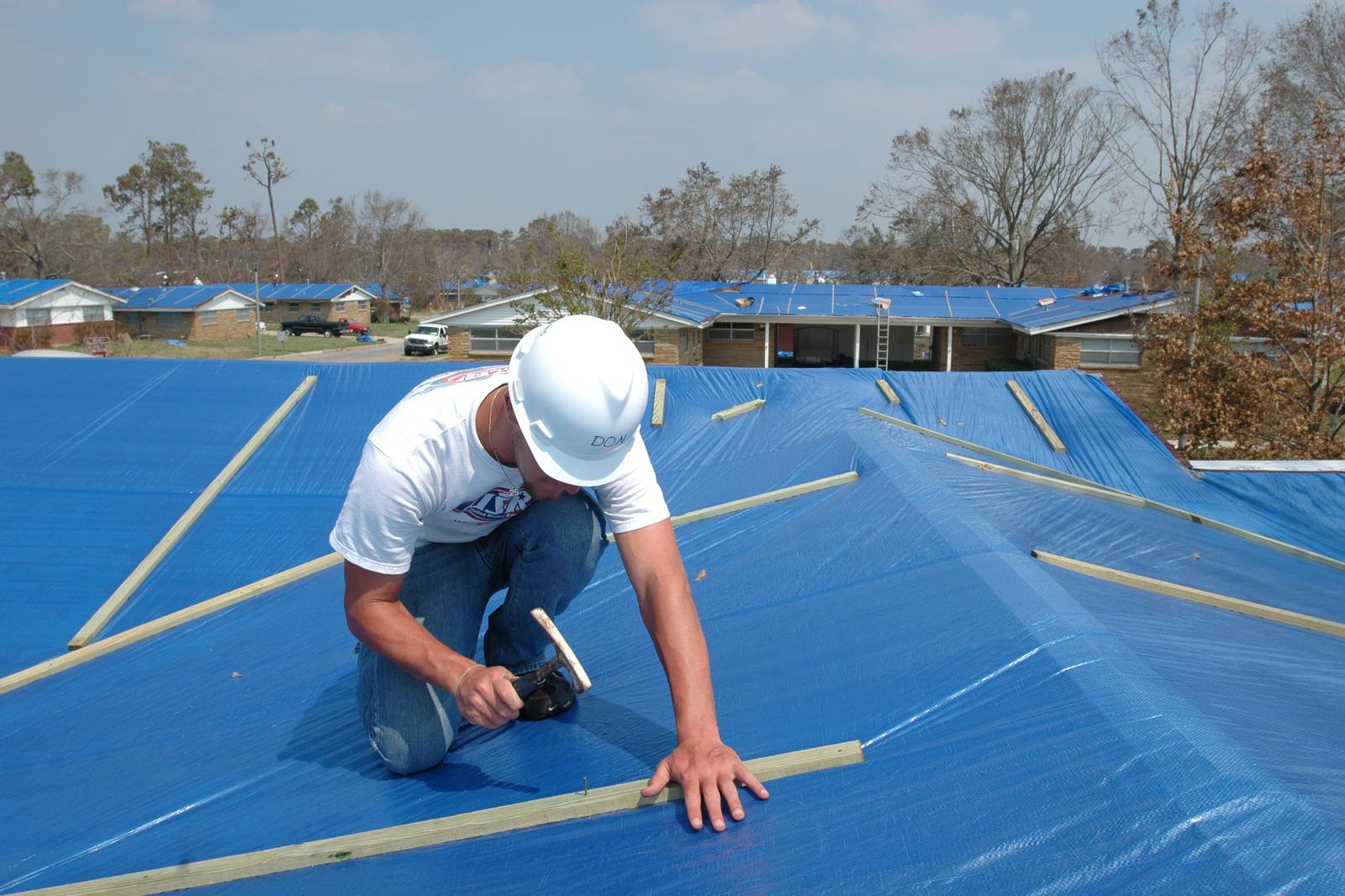
A proper tarp is secured to the roof with boards or fasteners, extends past the damaged area and over the ridge where possible, and is positioned so water runs off instead of pooling. A tarp held down with a few bricks is likely to blow off in the next storm.
When to call for tarping
If any of these apply, the roof should be covered as soon as it is safe to do so.
You can see the roof deck or attic
Any exposed decking or open hole will let water straight into the house.
Water is coming through the ceiling
Active leaks during rain mean the roof is no longer keeping water out.
More rain is in the forecast
Covering the damage before the next storm can prevent a second round of interior damage.
Large areas of shingles are missing
Underlayment alone is not designed to be exposed to weather for long.
How emergency tarping is done
Safety comes first. A damaged roof can be unstable.
Assess safety
The crew checks whether the roof can be walked safely and whether a tree or debris needs to be removed first.
Document the damage
The damage is photographed before it is covered, giving you a record for your insurer.
Clear and prepare
Loose debris is removed from the damaged area so the tarp lies flat.
Install and secure the tarp
A heavy tarp is placed over the damage, extended past it, and fastened with boards or fasteners to resist wind.
Plan the permanent repair
With the home protected, repair or replacement and any interior drying can be scheduled.
Every property is different. The exact scope is set after an on-site assessment.
One call, every trade, start to finish
Roof problems often come with interior damage attached. We can coordinate the roof work and any water damage inside from the same request.
One point of contact
You work with one coordinator instead of tracking down separate contractors for each part of the job.
Every trade the job needs
Restoration rarely stops at one trade. Follow-on work like drywall, flooring, electrical or roofing can run through the same request.
Local professionals
We connect homeowners with service professionals in our network across Illinois, Missouri, Kentucky and Indiana.
Records you can share
Photos and written scopes from the job can be shared with your insurer at your discretion. We are not affiliated with any insurance company and do not make coverage decisions.
Emergency Roof Tarping FAQs
Related services
Is your roof open to the weather?
Call us if water is coming in now. You can also send details through the form below.
Call +1 (618) 925-0085Filling out the form
Under Services, choose Roofing, then select Emergency roof tarping. If this is happening now, mark the emergency status as Yes.
Not a homeowner?