Mold Remediation
Mold Inspection
Know what you are dealing with before anything gets torn out.
A mold inspection looks for visible and hidden growth, tracks down the moisture source and maps the affected areas, so any remediation plan is based on facts instead of guesses.
What a mold inspection includes
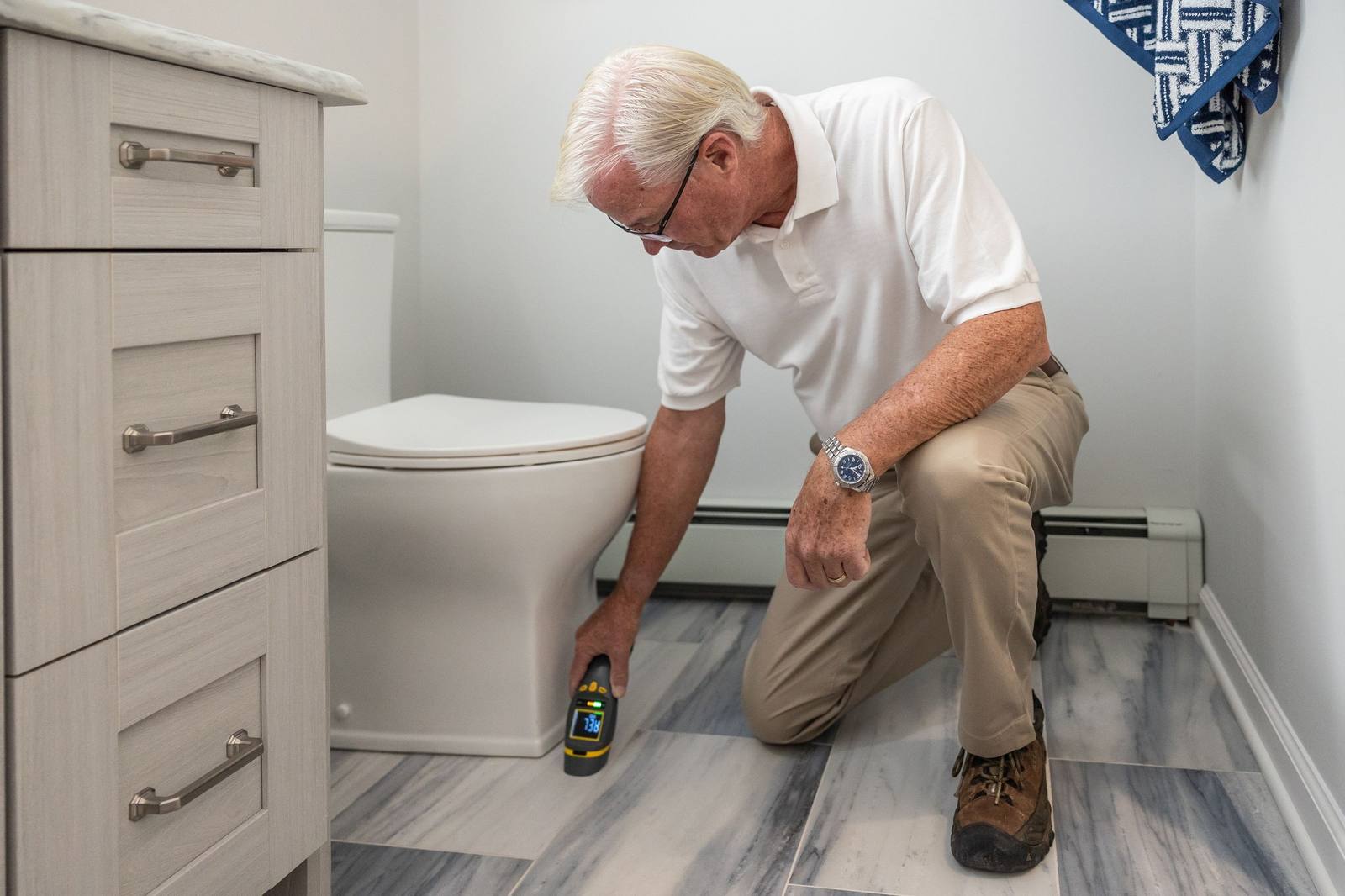
Mold needs moisture to grow, so an inspection is as much about water as it is about mold. The inspector looks for visible growth, then uses tools such as moisture meters and thermal imaging to find damp materials behind walls, under floors and above ceilings.
Depending on the situation, the inspection may include air or surface sampling analyzed by a lab. Sampling is not always necessary. When mold is clearly visible, the bigger questions are usually how far it extends and what is keeping the area wet.
Signs it is time for a mold inspection
Any one of these is a reasonable reason to have the home checked.
A musty or earthy odor
Odor is often the first clue to hidden growth inside walls, under flooring or in the HVAC system.
Stains after a leak
Brown or yellow staining on ceilings and walls shows where water has been, and where mold may follow.
Peeling paint or bubbling wallpaper
Trapped moisture behind a finish can lift paint and wallpaper.
Persistent condensation
Windows, pipes or walls that stay wet point to humidity problems that support mold.
Small spots that keep returning
Growth that comes back after cleaning usually means there is an ongoing moisture source.
How the inspection works
A typical residential inspection follows these steps.
Conversation and history
The inspector asks about leaks, odors, symptoms and past repairs to know where to focus.
Visual inspection
Living areas, the attic, the basement or crawlspace and HVAC components are checked for visible growth and water damage.
Moisture mapping
Moisture meters and thermal imaging help locate wet materials that cannot be seen.
Sampling when useful
If it will help answer a specific question, air or surface samples are collected and sent to a lab.
Findings and next steps
You get an explanation of what was found, where, and what is causing it, along with recommended next steps.
Every property is different. The exact scope is set after an on-site assessment.
One call, every trade, start to finish
Mold work only holds up when the moisture problem behind it gets fixed too. We coordinate both, so you are not left managing them separately.
One point of contact
You work with one coordinator instead of tracking down separate contractors for each part of the job.
Every trade the job needs
Restoration rarely stops at one trade. Follow-on work like drywall, flooring, electrical or roofing can run through the same request.
Local professionals
We connect homeowners with service professionals in our network across Illinois, Missouri, Kentucky and Indiana.
Records you can share
Photos and written scopes from the job can be shared with your insurer at your discretion. We are not affiliated with any insurance company and do not make coverage decisions.
Mold Inspection FAQs
Related services
Mold Remediation
Containing and removing mold growth and fixing the cause.
Crawlspace Mold
Assessing and remediating mold growth under the house.
HEPA Cleaning
HEPA vacuuming and detail cleaning to remove settled spores and fine dust.
Schedule a mold inspection
Tell us what you are seeing or smelling and where. We will set up an inspection with a local professional.
Call +1 (618) 925-0085Filling out the form
Under Services, choose Mold Remediation, then select Mold inspections.
Not a homeowner?