
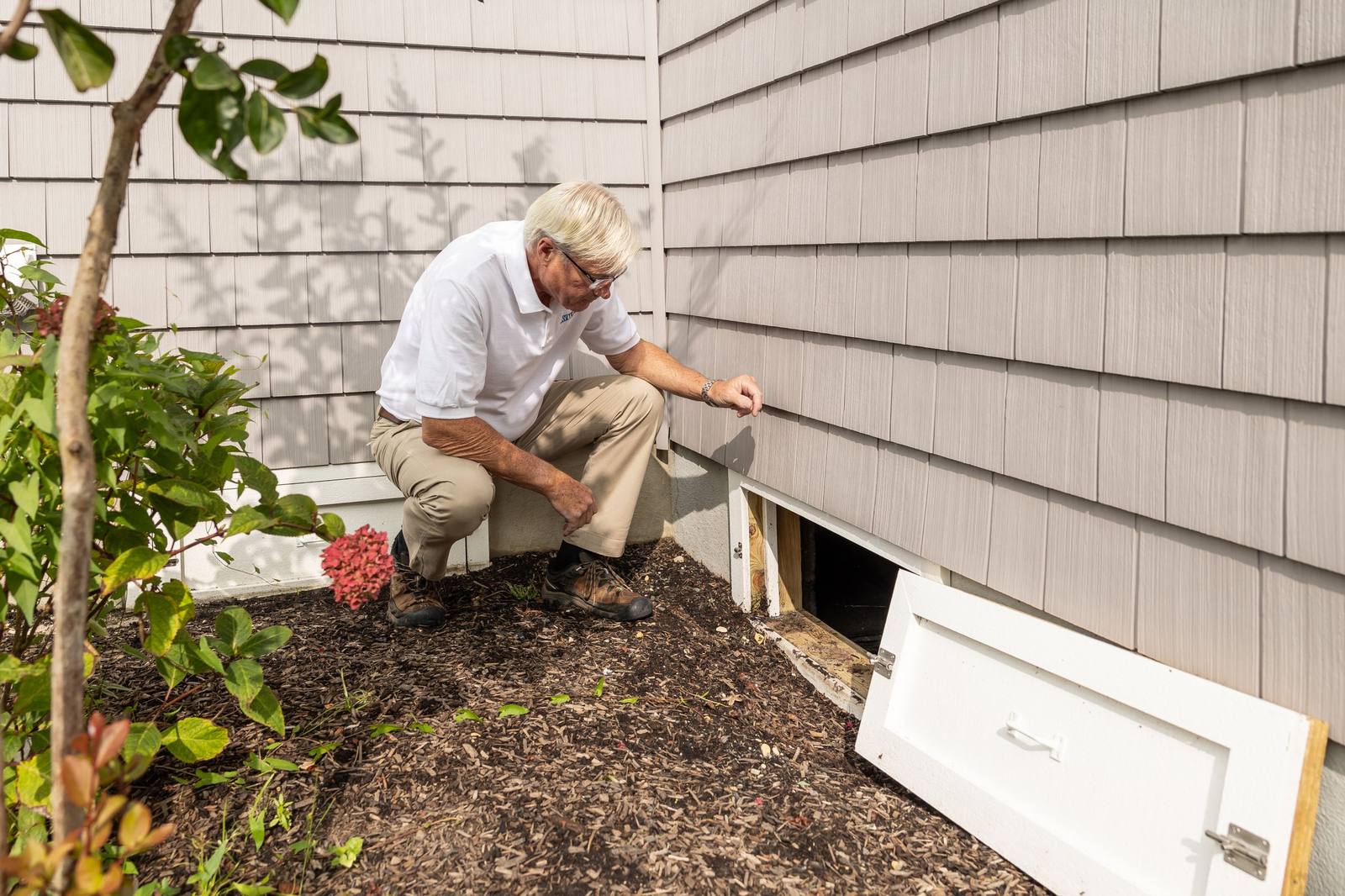
Crawlspace Repair
Vapor Barriers
Bare soil releases moisture into your crawlspace every day.
A vapor barrier covers the crawlspace floor with a durable plastic sheet, limiting how much ground moisture reaches the framing and the air in your home.
What a vapor barrier does
Even soil that looks dry gives off water vapor. In a crawlspace, that moisture rises toward the joists and subfloor and can raise humidity enough to support mold and wood decay. A vapor barrier, also called a ground cover or vapor retarder, blocks most of that moisture at the source.
Many older homes have a thin, torn or partial sheet of plastic that no longer does much. Replacing it with a thicker, properly overlapped barrier is often a cost-effective first step. Some homeowners stop there. Others go on to full encapsulation.
Signs your vapor barrier is failing or missing
A quick look through the crawlspace access door can tell you a lot.
Exposed soil
Any area of uncovered dirt is releasing moisture into the space.
Torn or shifted plastic
Barriers get torn by foot traffic, pests and service work. Gaps reduce how well they work.
Damp wood above
Moisture on the underside of the subfloor can point to high humidity from the ground.
Water on top of the plastic
Pooled water on the barrier suggests a leak or drainage issue that needs to be fixed separately.
How a vapor barrier is installed
A good installation covers all of the soil and leaves few gaps.
Inspect the crawlspace
The space is checked for standing water, plumbing leaks, mold and damaged framing that should be fixed first.
Remove old material and debris
Old plastic, construction debris and sharp objects are cleared so they do not puncture the new barrier.
Lay the barrier
The sheet is laid across the soil with generous overlaps at seams and run up the foundation walls and around piers.
Seal and fasten
Seams are taped and edges are fastened to the walls so the barrier stays in place.
Final check
The crawlspace is walked to confirm full coverage and that the access door closes properly.
Every property is different. The exact scope is set after an on-site assessment.
One call, every trade, start to finish
Crawlspace problems rarely have a single cause. Drainage, moisture control and the framing above it all need to be handled in the right order.
One point of contact
You work with one coordinator instead of tracking down separate contractors for each part of the job.
Every trade the job needs
Restoration rarely stops at one trade. Follow-on work like drywall, flooring, electrical or roofing can run through the same request.
Local professionals
We connect homeowners with service professionals in our network across Illinois, Missouri, Kentucky and Indiana.
Records you can share
Photos and written scopes from the job can be shared with your insurer at your discretion. We are not affiliated with any insurance company and do not make coverage decisions.
Vapor Barriers FAQs
Related services
Encapsulation
Sealing the crawlspace floor, walls and vents and controlling humidity.
Drainage Systems
Getting standing water out of the crawlspace and keeping it out.
Sump Pumps
Installing and replacing pumps that remove water from crawlspaces and basements.
Need a new crawlspace vapor barrier?
Let us know what is under your house now. A local professional can check the space and recommend the right barrier.
Call +1 (618) 925-0085Filling out the form
Under Services, choose Crawlspace Repair, then select Vapor barriers.
Not a homeowner?