
Crawlspace Repair
Structural Support
Sagging or bouncy floors usually start with the framing underneath.
Moisture, rot, insects and undersized framing can all weaken the floor system over a crawlspace. Structural support repairs restore the support those floors need.
What structural support work covers
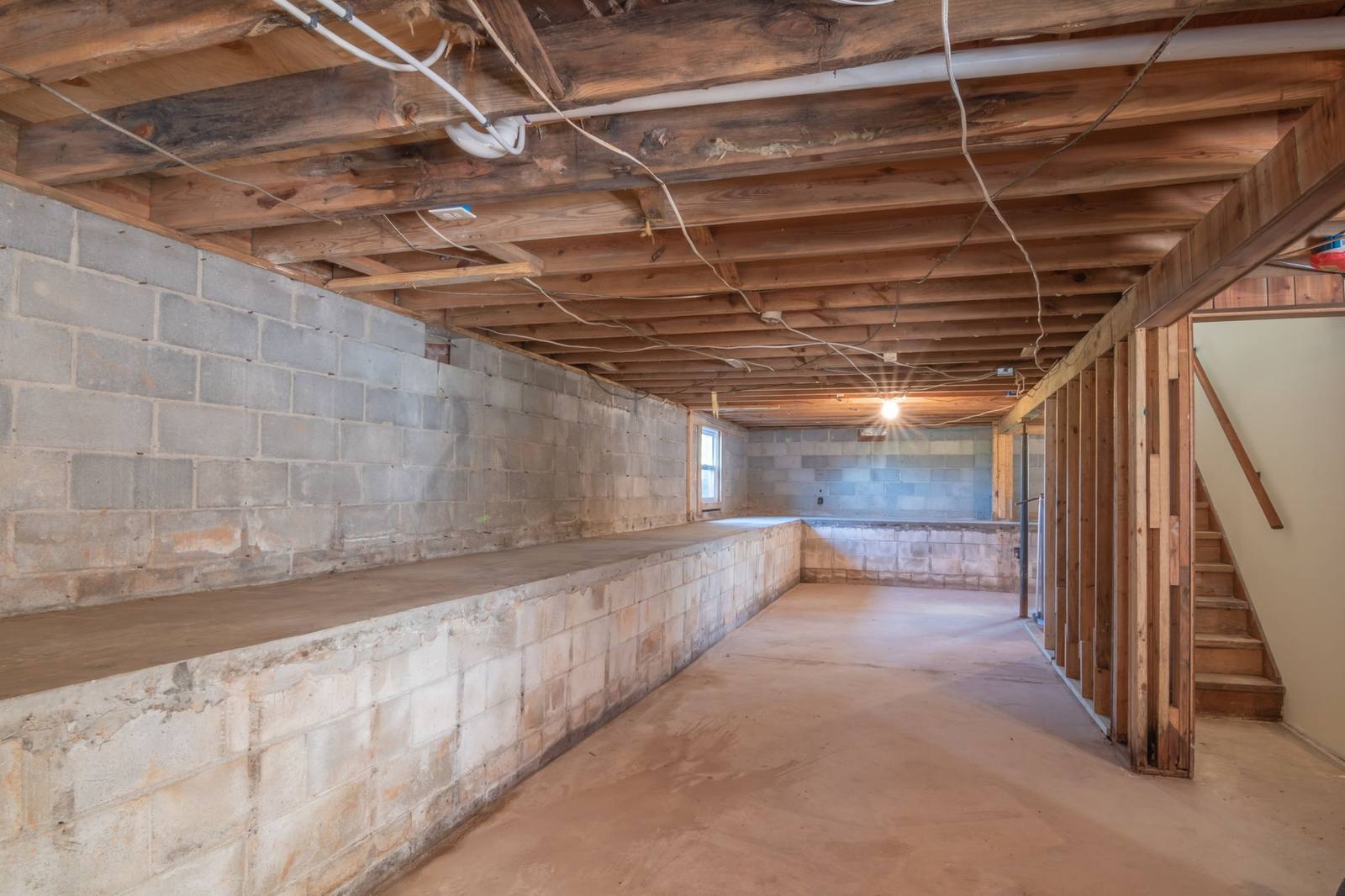
The floor above a crawlspace rests on joists, which sit on beams, which are held up by posts or piers and the foundation walls. When any part of that system weakens or was never spaced closely enough, the floor above starts to dip, bounce or crack.
Repairs can include adding new support posts and footings, installing adjustable steel supports, sistering new lumber alongside damaged joists, replacing rotted sill plates and reinforcing beams. Floors that have sagged over years are usually raised gradually, not all at once, to limit cracking in the walls and finishes above.
Warning signs of failing floor support
These signs usually show up gradually, so they are easy to get used to.
Dips or slopes in the floor
A marble that rolls across the room, or a visible low spot near the middle of a floor, can point to weak support.
Gaps at baseboards
Space opening up between the floor and the baseboard often means the floor is dropping.
Cracked tile or grout
Tile does not flex, so movement in the floor system shows up as cracks.
Soft or crumbling wood under the house
Joists or sill plates that can be dented with a screwdriver are likely rotted.
Makeshift supports
Stacked blocks, wood shims or bottle jacks sitting on dirt are not long-term support.
How structural support repairs are done
Structural work starts with understanding why the framing failed.
Inspect the floor system
Joists, beams, sill plates and supports are checked for rot, insect damage, cracking and spacing. Floor elevations may be measured.
Address the cause
If moisture caused the damage, drainage or moisture control is planned too, so the new framing does not fail the same way.
Shore and repair framing
Temporary supports carry the load while damaged joists are sistered and rotted sill plates or beam sections are replaced.
Install permanent supports
New posts or adjustable steel supports are set on proper footings at the spacing the floor needs.
Adjust and recheck
Supports are adjusted gradually where the floor needs lifting, and the floor is checked again after the work settles.
Every property is different. The exact scope is set after an on-site assessment.
Good to know
Permits may be required
Structural repairs often need a building permit, and some jurisdictions or situations may call for an engineer’s review.
Lifting a floor can affect finishes
Raising a floor that has been sagging for years can open drywall cracks or affect doors. Work is done gradually to limit this.
One call, every trade, start to finish
Crawlspace problems rarely have a single cause. Drainage, moisture control and the framing above it all need to be handled in the right order.
One point of contact
You work with one coordinator instead of tracking down separate contractors for each part of the job.
Every trade the job needs
Restoration rarely stops at one trade. Follow-on work like drywall, flooring, electrical or roofing can run through the same request.
Local professionals
We connect homeowners with service professionals in our network across Illinois, Missouri, Kentucky and Indiana.
Records you can share
Photos and written scopes from the job can be shared with your insurer at your discretion. We are not affiliated with any insurance company and do not make coverage decisions.
Structural Support FAQs
Related services
Drainage Systems
Getting standing water out of the crawlspace and keeping it out.
Encapsulation
Sealing the crawlspace floor, walls and vents and controlling humidity.
Mold Cleanup
Cleaning mold off crawlspace framing before the space is sealed or repaired.
Concerned about the floor over your crawlspace?
Describe what you are noticing upstairs. A local professional can inspect the framing and supports underneath.
Call +1 (618) 925-0085Filling out the form
Under Services, choose Crawlspace Repair, then select Structural supports.
Not a homeowner?